When people hear the phrase circular economy, it can sound jargon-y. It’s the kind of thing you might read in a policy paper or hear at a conference. But in reality, it’s a simple, practical, and exciting idea: Instead of using things once and tossing them, we design systems where materials, products, and resources are used, reused, repaired, and recycled again & again.
“The circular economy flips that on its head and asks: what if waste was the beginning of something new?”
Think of it like this: the opposite of a circular economy is a “take, make, waste” economy. We take resources, make stuff, and when we’re done, we throw it away. The circular economy flips that on its head and asks: what if waste was the beginning of something new?
Why the Circular Economy Matters in Canada Now
Canada and the world are at a critical moment. We’re facing challenges with waste, climate change, and resource scarcity. Did you know Canadians produce more garbage per person than almost any other country in the world? That’s not exactly a title we want. Landfills are filling up, recycling systems are strained, and the climate crisis means we need smarter, more sustainable ways of living. The circular economy isn’t just about saving the planet—though that’s a big part of it. It’s also about saving money, building resilient communities, and unlocking creativity.
And the good news is: Canadians are already doing it! Across the country, organizations, businesses, and regular ‘ol people are stepping up with creative ways to share, repair, and reuse.
Sharing is the New Owning
One example of the circular economy in action is through sharing platforms. Instead of everyone buying the same thing, communities pool resources so people can borrow what they need, when they need it.
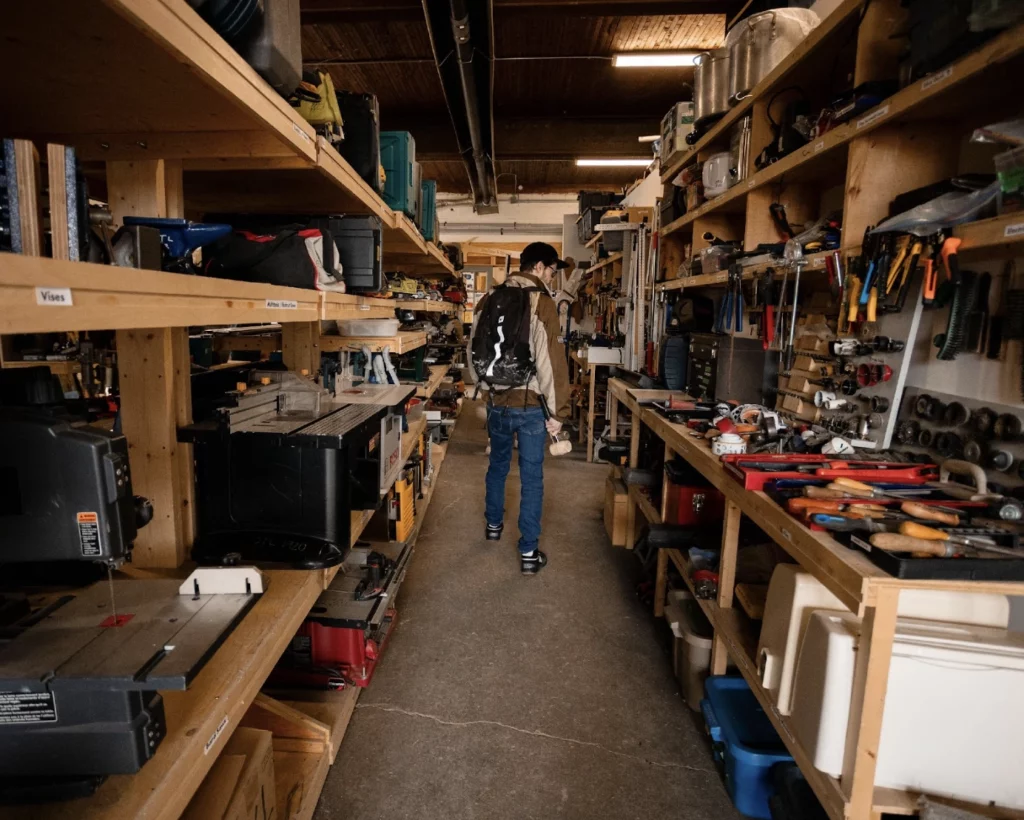
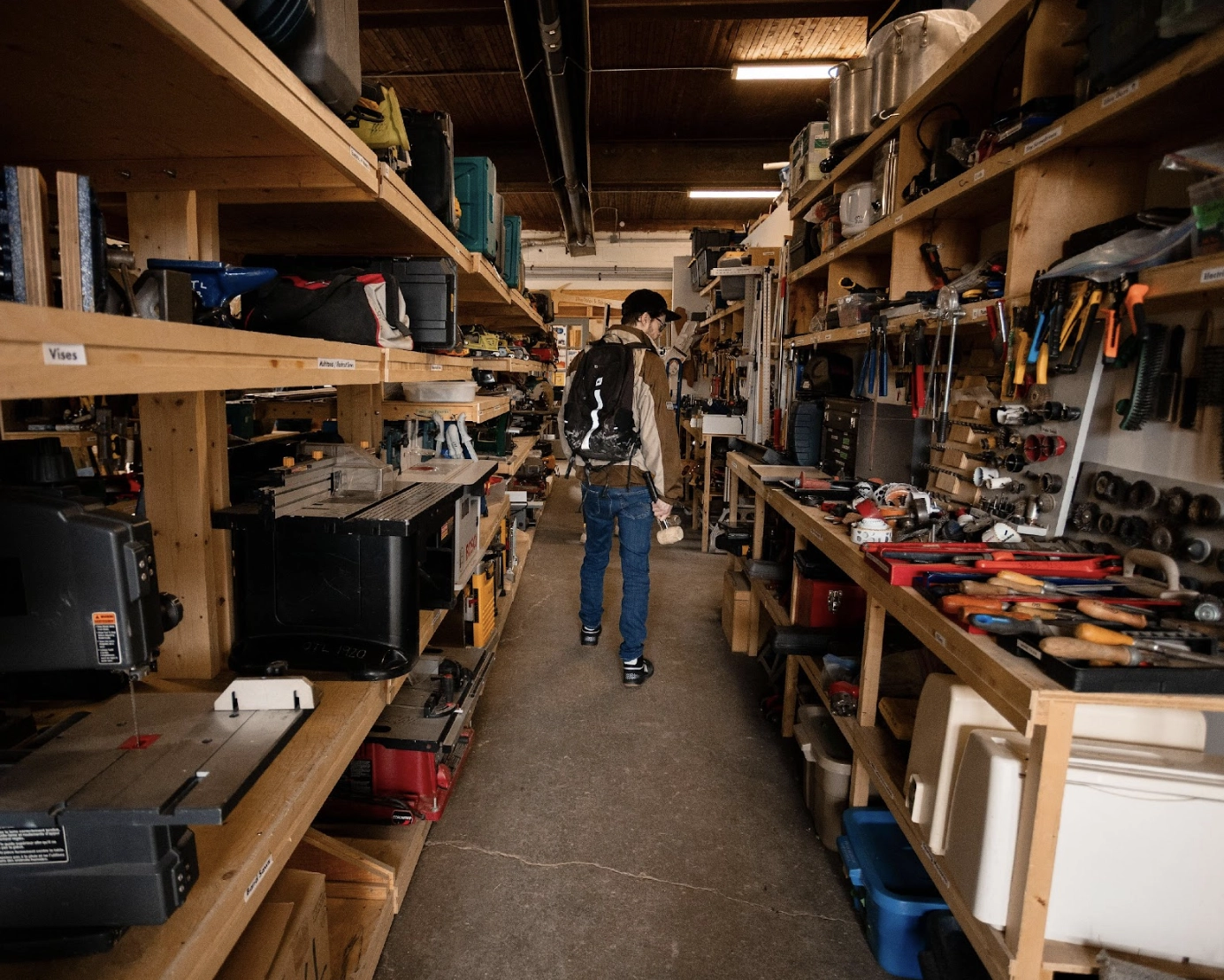
Enter the Ottawa Tool Library (OTL). Since 2015, OTL has made it possible for thousands of people to borrow tools the same way you borrow books from a book library. Need a drill for a weekend project? A saw for a new bookshelf? A sewing machine to mend your clothes? Instead of buying something that might sit unused 99% of the time (or worse, used once and never again), you can borrow it from OTL. That’s the circular economy in action: reducing waste, saving money, and building community connections all at once.
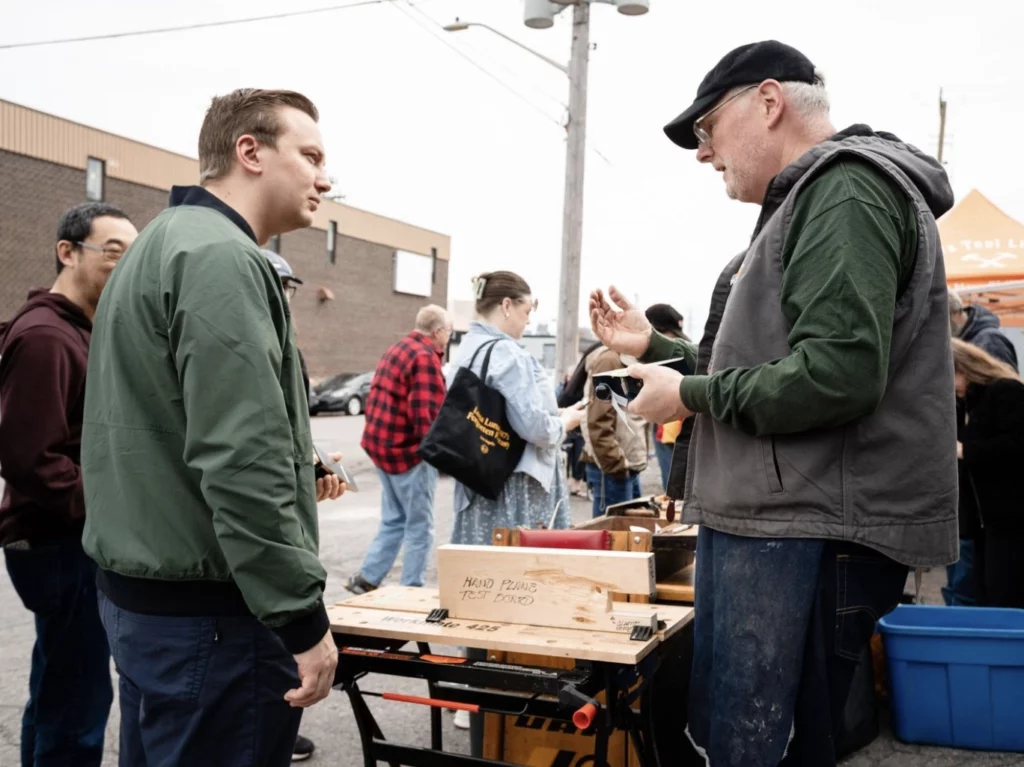
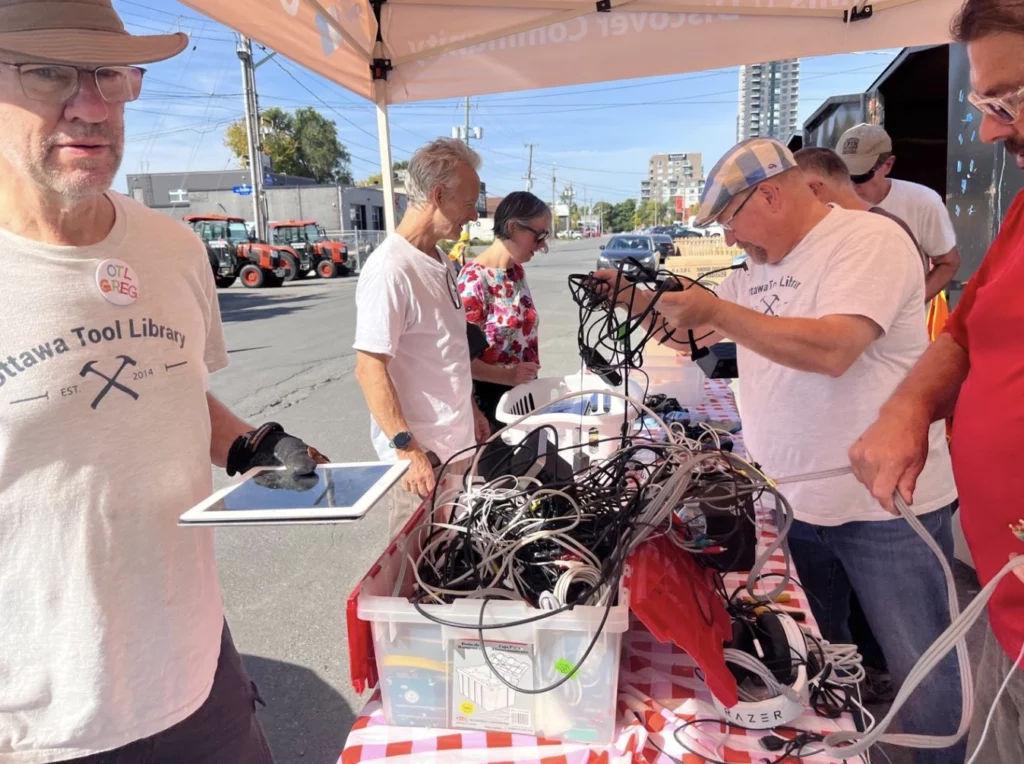
And OTL’s contribution to the circular economy doesn’t stop there. Our Repair Cafés extend the life of items that would otherwise head to the landfill. Volunteers fix broken lamps, appliances, clothing, and more, giving them a second life. Our Tinkering School teaches kids the value of making and mending, instilling circular economy values in the next generation. Our workshops teach the community new skills to fix and make while feeling proud of learning new skills together.
Other Canadian Circular Economy Initiatives
OTL isn’t alone. Across Canada, other communities are rolling up their sleeves and putting circular practices in motion:
- Ottawa Outdoor Gear Library (Ottawa, ON): The OOGL is a free, community-based gear-lending service in Ottawa whose mission is to make outdoor recreation more accessible to people facing barriers. It launched in 2021 to respond to inequities in access to nature-based experiences, especially for people living with low incomes, newcomers, youth, racialized communities and 2SLGBTQ+ individuals.
- Toronto Tool Library (Toronto, ON): The inspiration for Ottawa’s version, this library has been lending out tools since 2012 and now offers creative workspaces, 3D printers, and community programming. They show how tool libraries can evolve into full-fledged makerspaces that encourage repair, reuse, and innovation.
- The Thingery (Vancouver, BC): A network of self-service lending libraries housed in shipping containers. Members can borrow camping gear, sports equipment, and tools. It’s a scalable model that can be replicated in neighbourhoods across the country.
- Waste Free YEG (Edmonton, AB): A grassroots group focused on waste reduction and circular economy education. They host swaps, workshops, and events to encourage creative reuse and sustainable living.
Why These Initiatives Matter
What all these examples have in common is that they’re people-powered. The circular economy isn’t just about big corporations and government policies (though those are important too). It’s about neighbours helping neighbours, communities pooling resources, and citizens realizing we don’t need to buy our way to happiness.
Sharing platforms like tool libraries cut down on unnecessary consumption. Repair Cafés keep things out of the landfill and pass on valuable skills. Swap events and lending libraries make life more affordable. All of these reduce the strain on natural resources and lower greenhouse gas emissions. At the same time, they build trust, connection, and resilience in communities.
Canada’s Role in the Global Circular Economy
Globally, the circular economy is gaining traction, with the European Union leading policies and businesses experimenting with new models. Canada has a huge opportunity to catch up and even lead in some areas. The Circular Economy Council has spearheaded initiatives like Circular Economy Month (ongoing since 2022), summits, action plans and more to raise awareness about the issues and solutions we face. Our vast resources, innovative spirit, and strong community networks put us in a great position to build systems that make circular living second nature.
The Ottawa Tool Library’s Place in the Bigger Picture
The Ottawa Tool Library is part of a growing movement across Canada that demonstrates how the circular economy can work at the community level. By reducing barriers to access, promoting repair over replacement, and inspiring new generations to value sustainability, OTL shows what’s possible when we rethink ownership and waste.
In ten years, OTL has grown from a small, shared space to a vibrant hub with lending services, a workspace, adult and youth programming, and repair events. It has helped thousands of Ottawans save money, learn new skills, and prevent tons of waste from heading to landfills. And perhaps most importantly, it has built community. Because when you borrow a tool, attend a Repair Café, or learn to fix something yourself, you’re not just participating in the circular economy – you’re part of a story about connection, creativity, and resilience.
Looking Forward
The next decade will be critical for Canada’s circular economy. We can choose to keep doing business as usual, buying and tossing, or we can embrace new systems that are more smart, fair, and better for the planet. Imagine a Canada where tool libraries exist in every city, where Repair Cafés are as common as coffee shops, where sharing platforms are second nature, and where waste is seen not as garbage but as potential.
We’re already on our way. With every borrowed drill, every mended toaster, every child who learns to tinker, we’re building that future. The Ottawa Tool Library and initiatives like it across Canada are showing us the path forward. They remind us that the circular economy isn’t just about systems and policies – it’s about people, creativity, and the belief that together, we can build a future that truly lasts.
So next time you need a tool, or have something broken, or want to try a project you’ve never done before, think about how you can step into the circle.